
Thermostatic Radiator Valves: Are They Worth Fitting?
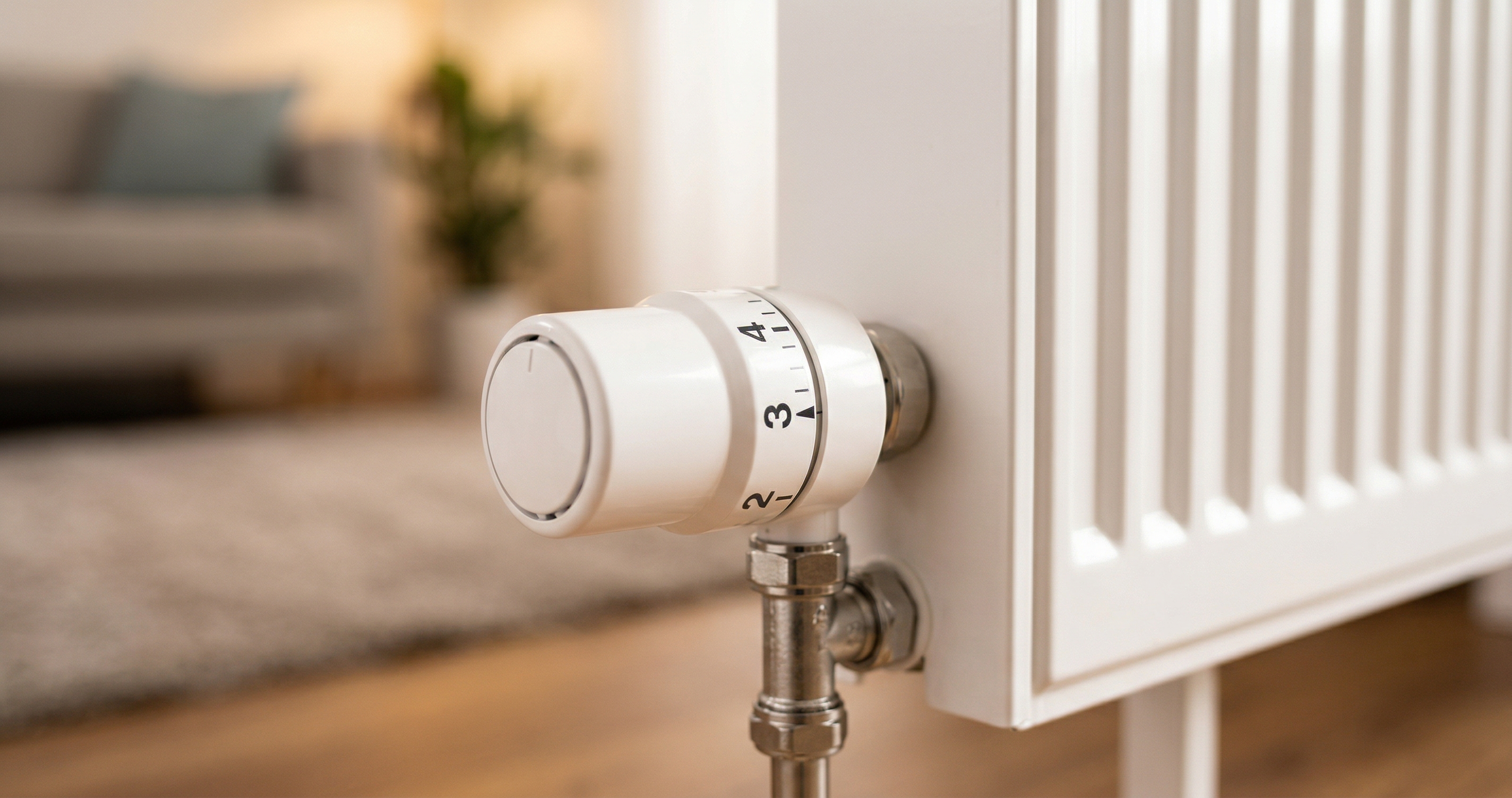
If you have ever walked into a spare bedroom that feels like a sauna while the living room is barely warm, thermostatic radiator valves could be the answer. TRVs are one of the most cost-effective upgrades you can make to a central heating system, yet many homes across the Wirral still have old manual valves that offer no temperature control at all.
In this guide, I will explain what TRVs are, how they work, what they cost, and whether the newer smart TRVs are worth the extra investment.
What Is a Thermostatic Radiator Valve?
A thermostatic radiator valve — or TRV — is a self-regulating valve fitted to your radiator that controls the flow of hot water based on the room temperature. Each valve has a numbered dial, usually from 0 to 5, which corresponds to a target temperature for that room.
When the room reaches the set temperature, the valve restricts the flow of hot water into the radiator. When the room cools down, the valve opens again. This means each room can be heated independently without adjusting the boiler or thermostat.
The mechanism inside is straightforward. A wax or liquid capsule expands as it warms up, pushing a pin that closes the valve. No batteries, no wiring — it is entirely mechanical. That simplicity is part of why TRVs are so reliable.
How TRVs Save You Money
The Energy Saving Trust estimates that fitting TRVs alongside a room thermostat and programmer can save a typical household around £75 per year on gas bills. In practice, the savings depend on how your home is currently set up, but the principle is simple: you stop heating rooms that do not need it.
Think about how a typical Wirral home is used during the day. If you spend most of your time in the kitchen and living room, there is no need for the spare bedroom and bathroom to be at 21 degrees. Setting those radiators to 2 or 3 instead of 5 means your boiler runs for shorter cycles, using less gas overall.
The key savings come from:
- **Reduced boiler run time** — the boiler modulates down or cycles off sooner when fewer radiators are demanding heat
- **No overheating** — rooms that get natural warmth from cooking, sunlight, or appliance heat do not get unnecessarily topped up
- **Zone control without zoning** — you get many of the benefits of a zoned system without the cost of motorised zone valves and additional pipework
What Do TRVs Cost?
The valves themselves are inexpensive. A standard TRV costs between £8 and £20 per unit. Professional fitting typically costs £40 to £80 per radiator, depending on access and whether the existing valve connections are compatible.
For a three-bedroom home with 8 radiators, you are looking at roughly £400 to £700 to have TRVs fitted throughout — including parts and labour. Most households see a return on that investment within 4 to 6 years through lower gas bills, and sooner if energy prices rise.
One important note: you should **not** fit a TRV to the radiator in the room where your main thermostat is located. That radiator should have a standard manual valve so it always responds to the room thermostat. Fitting a TRV there can cause the boiler to overwork because the thermostat never reaches its target temperature.
Which Rooms Benefit Most?
Not every room needs a TRV, but most benefit from one. Here is a rough guide:
- **Bedrooms** — the biggest benefit. Most people sleep better in a cooler room (around 16 to 18 degrees), so setting bedroom TRVs to 2 or 3 saves a significant amount of energy
- **Spare rooms and guest bedrooms** — can be turned down to 1 or even the frost protection setting when not in use
- **Hallways and landings** — these pick up residual heat from other rooms, so a TRV set to 2 prevents wasted energy
- **Bathrooms** — a moderate setting of 3 or 4 keeps the room comfortable without turning it into a steam room
- **Living areas** — your main living room probably wants to be warmest, so a setting of 4 or 5 is typical
- **Kitchen** — cooking generates a lot of heat, so a lower TRV setting prevents the room from overheating
Smart TRVs: Worth the Upgrade?
Smart TRVs from brands like Tado, Drayton Wiser, and Hive replace the mechanical capsule with an electronic actuator controlled via an app. They cost significantly more — typically £50 to £80 per valve — plus you need the associated hub and smart thermostat.
The advantages are genuine. You can set schedules per room, control the heating remotely, and get reports on your energy usage. Some smart TRVs detect open windows and automatically turn the radiator off. Geofencing can turn the heating down when everyone leaves the house.
That said, for many homes a set of standard TRVs does the job perfectly well. Smart TRVs make the most sense if you already have a smart thermostat and want finer control, or if your household routine is irregular and you want remote adjustments.
Professional Fitting vs DIY
Replacing a manual valve with a TRV is technically possible as a DIY job, but it involves draining down the radiator, which means isolating it and catching the water. If the existing valve body is compatible, you may only need to swap the head — a five-minute job with no tools.
However, if the valve body needs replacing, you are working with compression fittings and water. A poorly sealed connection will drip and can cause damage over time. I would always recommend having a heating engineer fit TRVs if you are not confident working with water connections. It is a quick job for a professional and guarantees a watertight result.
A Simple Upgrade That Pays for Itself
Thermostatic radiator valves are one of those rare home improvements that genuinely pay for themselves. They are inexpensive, reliable, and give you room-by-room control without any major work to your heating system.
If your radiators still have plain manual valves — or if your TRVs are old and stiff — it is well worth having them upgraded. At JF Plumbing & Heating, we fit TRVs across homes on the Wirral every week and can advise on the best setup for your property. Get in touch for a free quote.