
Carbon Monoxide Safety: The Silent Danger in Your Home
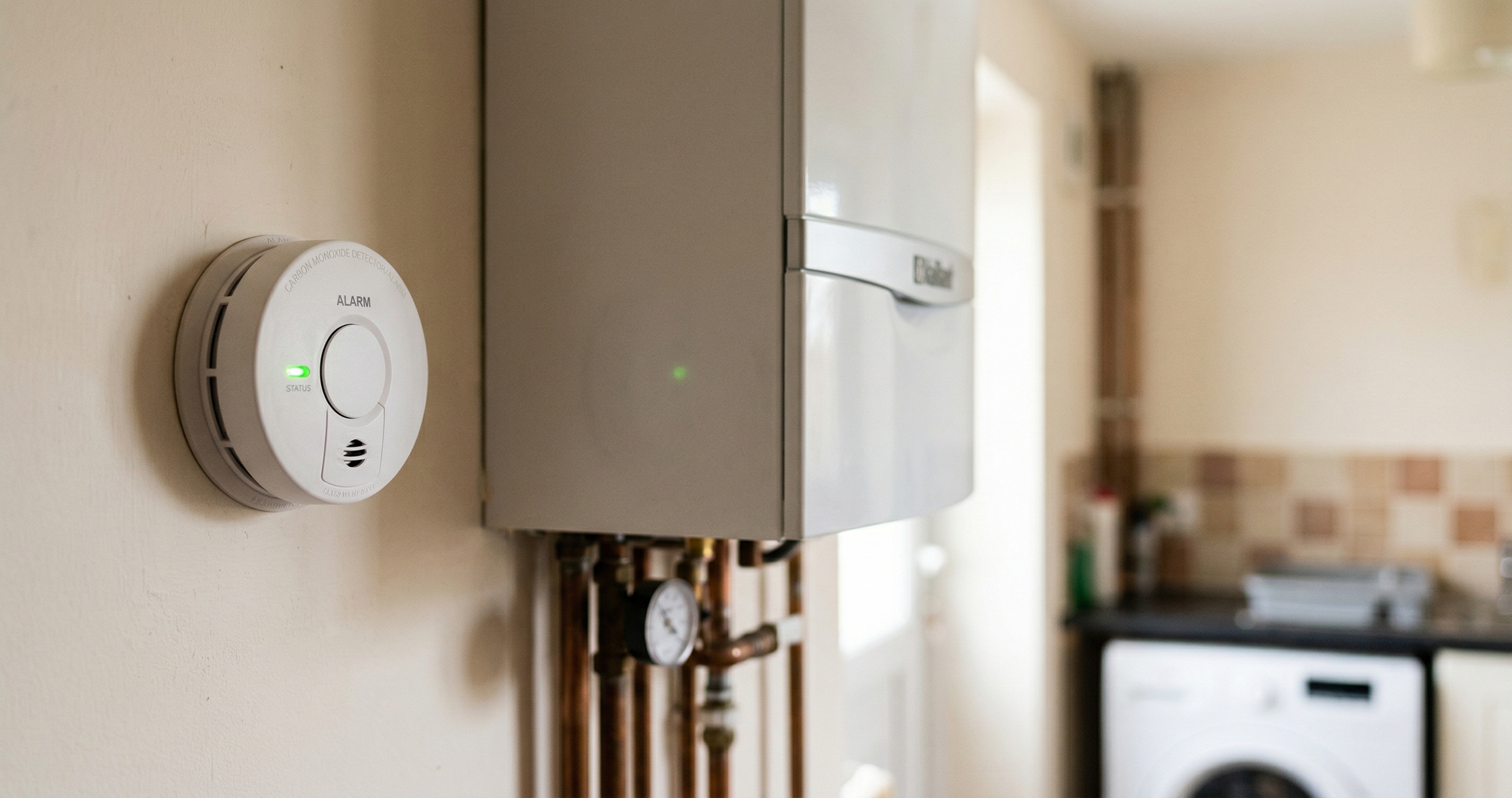
Carbon monoxide is called the silent killer for good reason. It is an odourless, colourless, tasteless gas that is impossible to detect without an alarm. Every year in the UK, around 60 people die from accidental carbon monoxide poisoning and many hundreds more are hospitalised. The vast majority of these incidents are entirely preventable.
As a Gas Safe registered engineer working across the Wirral and Merseyside, carbon monoxide safety is something I take extremely seriously. Here is what every household needs to know.
What Is Carbon Monoxide?
Carbon monoxide (CO) is a gas produced when fuels — natural gas, oil, coal, wood, petrol — burn incompletely. When a gas appliance is working correctly, the fuel burns cleanly and the combustion gases are safely vented outside through the flue. But when something goes wrong — a blocked flue, a faulty burner, poor ventilation — carbon monoxide can escape into your living space.
Because you cannot see, smell, or taste it, the first sign of a problem is often the physical symptoms it causes.
Symptoms of Carbon Monoxide Poisoning
Carbon monoxide prevents your blood from carrying oxygen around your body. The symptoms depend on the level and duration of exposure.
Low-level exposure (over hours or days):
- Headaches, particularly dull and persistent
- Dizziness and nausea
- Tiredness and confusion
- Shortness of breath
- Stomach pain
High-level exposure (can develop within minutes):
- Loss of consciousness
- Seizures
- Respiratory failure
The symptoms of low-level exposure are often mistaken for flu, food poisoning, or general fatigue. A telling sign is that the symptoms improve when you leave the house and return when you come home. If multiple people in the household are feeling unwell at the same time with similar symptoms, take it seriously.
Common Sources in the Home
Any fuel-burning appliance can produce carbon monoxide if it malfunctions. The most common sources in UK homes are:
Gas boilers. The most frequent source of domestic CO incidents. A cracked heat exchanger, blocked condensate pipe, obstructed flue, or incorrect gas pressure can all cause incomplete combustion. This is one of the key reasons an annual boiler service is so important — a Gas Safe engineer checks for CO production as part of every service.
Gas fires and heaters. Both mains gas fires and portable gas heaters can produce CO. Flueless gas fires rely on adequate room ventilation to operate safely. If air vents have been blocked — often during redecoration — the risk increases significantly.
Gas cookers and hobs. While cookers are designed for intermittent use in ventilated kitchens, a poorly adjusted burner can produce elevated CO levels. Persistent yellow or orange flames (instead of blue) on a gas hob are a sign of incomplete combustion.
Open fires and wood burners. Blocked chimneys, poor chimney draw, and closed air vents can cause CO to spill into the room rather than going up the chimney.
Oil boilers. Less common on the Wirral but present in some rural areas. Oil boilers can produce CO just like gas boilers if the burner is not set up correctly or the flue is obstructed.
Carbon Monoxide Detectors
A CO alarm is your last line of defence and should be considered as essential as a smoke alarm. Here is what you need to know about choosing and placing them.
What to Buy
Look for an alarm that is certified to **BS EN 50291** — this is the current British and European standard. Avoid cheap imports that do not carry this certification. Reputable brands include Honeywell, Kidde, and FireAngel. Expect to pay 15 to 25 pounds for a quality unit.
Where to Place Them
- **In every room with a gas appliance** — this includes the room with the boiler, any room with a gas fire, and the kitchen
- **At head height** — CO mixes with air and does not rise like smoke, so place the alarm at roughly breathing height (about 1.5 metres from the floor) or on a bedside table
- **Not directly above the appliance** — place it 1 to 3 metres away horizontally
- **In bedrooms** — if you have a gas boiler or fire in an adjoining room, place an alarm in the bedroom as well
Maintenance
Test your CO alarm monthly by pressing the test button. Replace the batteries annually (or when the low-battery warning sounds). Replace the entire unit every 5 to 7 years, or as stated by the manufacturer — the sensor degrades over time even if the battery is fine.
What to Do If Your CO Alarm Goes Off
If your carbon monoxide alarm sounds, do not ignore it and do not assume it is a false alarm. Follow these steps immediately:
Legal Requirements for Landlords
If you are a landlord in England, you are legally required to have a carbon monoxide alarm in any room with a fixed combustion appliance (gas boiler, gas fire, wood burner). This is in addition to the annual gas safety check carried out by a Gas Safe registered engineer.
Failure to comply can result in fines of up to 5,000 pounds per offence. More importantly, it puts your tenants' lives at risk.
The Importance of Annual Servicing
The best protection against carbon monoxide is prevention. An annual boiler service by a Gas Safe registered engineer includes a combustion analysis — a test that measures the gases coming out of the boiler's flue. If CO levels are elevated, the engineer will identify the cause and either repair the issue or condemn the appliance if it is not safe to use.
A service also checks the flue integrity, ventilation, and gas pressure — all factors that contribute to safe combustion.
Stay Safe
Carbon monoxide is a serious risk, but it is one you can manage with simple precautions: fit a certified alarm, service your appliances annually, and never block ventilation. If you are on the Wirral or across Merseyside and due a gas safety check or boiler service, contact JF Plumbing & Heating. Your family's safety is always worth the call.