
Boiler Kettling: Why Your Boiler Sounds Like a Kettle
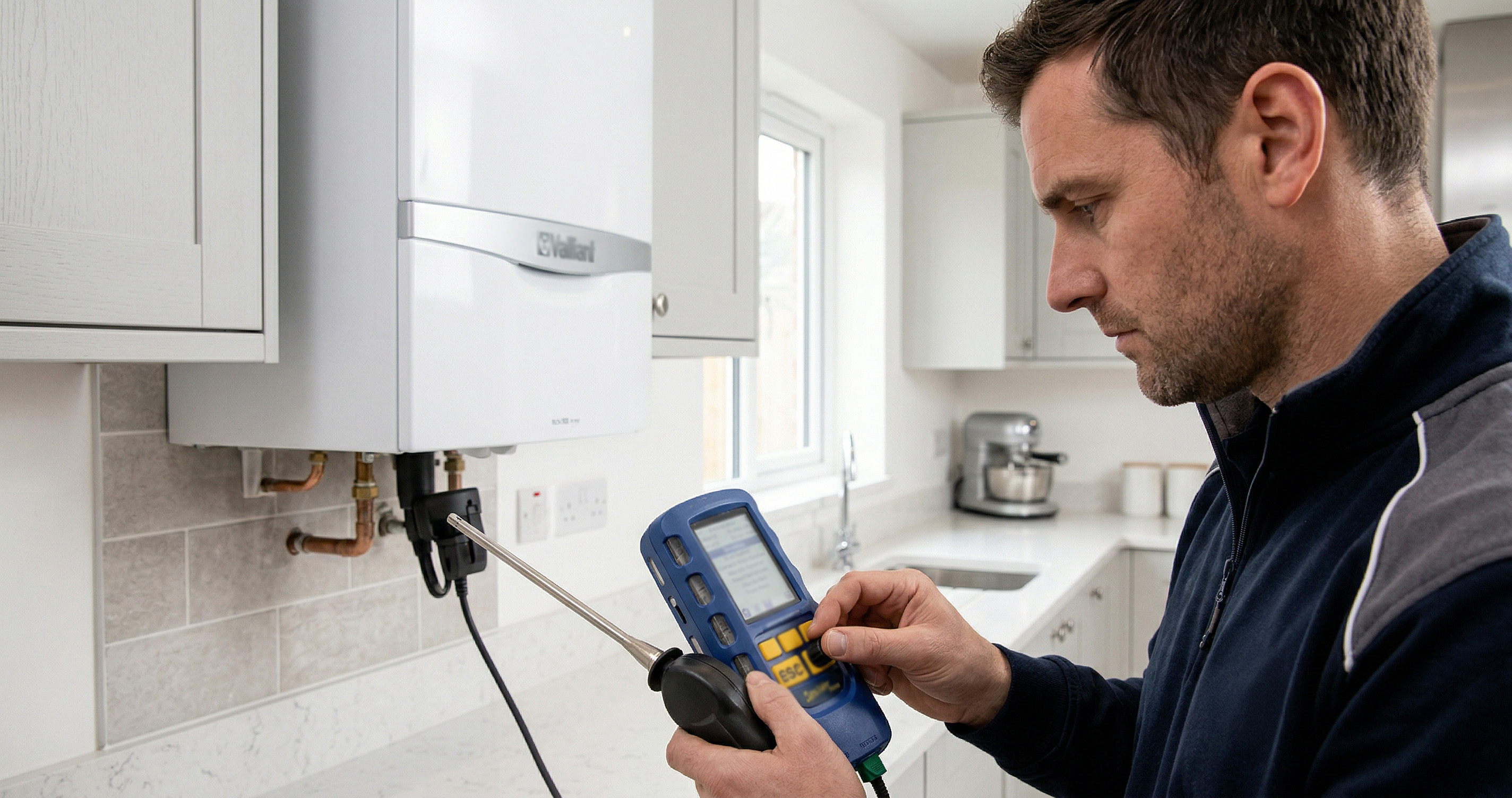
If your boiler has started making a rumbling, banging, or whistling noise — similar to a kettle coming to the boil — you are dealing with what heating engineers call kettling. It is one of the most common boiler complaints I come across on the Wirral, and while it can sound alarming, understanding the cause helps you deal with it before it turns into a costly repair.
What Exactly Is Boiler Kettling?
Kettling happens when water inside the boiler's heat exchanger is restricted or overheated, causing it to steam and boil rather than flow smoothly. The noise you hear is essentially the same phenomenon as a kettle — water turning to steam in a confined space creates pressure, turbulence, and that distinctive rumbling or whistling sound.
The heat exchanger is a compact metal component where the gas flame heats the water that circulates through your radiators and taps. When something restricts the flow of water through this component, the water that is trapped inside gets far too hot. Instead of being heated to the correct temperature and flowing on, it superheats, creates steam bubbles, and those bubbles collapse violently as they hit cooler water — producing the noise.
It is not just annoying. Left untreated, kettling puts excessive stress on the heat exchanger and other boiler components, reducing efficiency and shortening the boiler's lifespan.
What Causes Kettling?
There are three main culprits, and on the Wirral we see all of them regularly.
Limescale Buildup
Although Merseyside has relatively soft water compared to the south of England, limescale can still accumulate in the heat exchanger over years of use. Even a thin layer of scale acts as an insulator, forcing the boiler to work harder to heat the water. The restricted flow and localised overheating cause kettling.
Homes with older boilers that have never been serviced or treated for scale are most at risk. If you have noticed your boiler gradually getting noisier over several months, limescale is a likely cause.
Sludge and Central Heating Debris
This is the most common cause I encounter. Over time, the inside of your radiators and pipework corrodes, producing a black sludge made up of rust particles and magnetite. This sludge circulates through the system and settles in the heat exchanger — the narrowest part of the circuit.
As the passages inside the heat exchanger narrow, water flow slows down, and the trapped water overheats. The result is kettling. If your radiators also have cold spots at the bottom, sludge buildup is almost certainly part of the problem.
Faulty Thermostat or Overheating
If the boiler's internal thermostat is not reading the water temperature correctly, the burner may continue firing after the water has reached the target temperature. This causes the water in the heat exchanger to overheat, which again produces steam and kettling noise.
A faulty thermostat tends to produce sudden, dramatic kettling rather than the gradual onset you see with limescale or sludge. If your boiler was quiet last week and is now making a racket, a thermostat or control board issue is worth investigating.
How Is Kettling Fixed?
The right fix depends on the cause. A Gas Safe registered engineer can diagnose the issue by checking the boiler's internal components and testing the heating system.
Power Flush
If sludge is the cause — and it usually is — a power flush is the standard treatment. This involves connecting a machine to your heating system that pushes high-velocity water and cleaning chemicals through the radiators, pipework, and heat exchanger. The sludge is flushed out and the system is refilled with clean water and an inhibitor to prevent future corrosion.
A power flush on a typical Wirral home with 8 to 10 radiators costs between £350 and £600. It is a worthwhile investment because it not only stops the kettling but also improves heating efficiency and extends the life of the boiler.
Descaling the Heat Exchanger
If limescale is the primary issue, the heat exchanger can be removed and descaled with a specialist acid solution. In some cases, the engineer may be able to flush a descaling agent through the boiler without removing the component. This is a quicker and less expensive fix than a full power flush, typically costing £150 to £300.
Heat Exchanger Replacement
If the heat exchanger is severely scaled or corroded, cleaning may not be enough. A replacement heat exchanger costs between £300 and £500 for parts, plus labour. At that price point, it is worth considering whether a new boiler makes more financial sense, especially if the boiler is over 10 years old.
Thermostat or Control Board Repair
If the kettling is caused by a faulty thermostat, the fix is replacing the relevant control component. This is usually a straightforward repair costing £100 to £250 depending on the part.
How to Prevent Kettling
Prevention is far cheaper than a cure. Here are the steps that keep your boiler running quietly:
- **Annual boiler service** — a Gas Safe engineer checks the heat exchanger, controls, and overall system health during a routine service. Problems are caught before they cause noise or breakdowns.
- **Magnetic filter** — a magnetic system filter fitted to the pipework near the boiler catches sludge particles before they reach the heat exchanger. If your system does not have one, it is a worthwhile addition at around £100 to £150 fitted.
- **Inhibitor** — a chemical inhibitor added to the heating system water prevents internal corrosion and sludge formation. Your engineer should check and top up the inhibitor level at each service.
- **Do not ignore the noise** — kettling does not fix itself. The longer you leave it, the more damage the heat exchanger sustains and the more expensive the eventual repair.
When to Call an Engineer
If your boiler is making any unusual noise — rumbling, banging, whistling, or gurgling — it is worth having it looked at sooner rather than later. Kettling in particular puts real stress on the boiler and can lead to component failure if left.
At JF Plumbing & Heating, we diagnose and fix kettling issues across the Wirral. Whether it needs a power flush, a descale, or a component replacement, we will give you an honest assessment and a clear quote before any work begins. Get in touch to book a visit.