
What Is a Magnetic Filter and Does Your Boiler Need One?
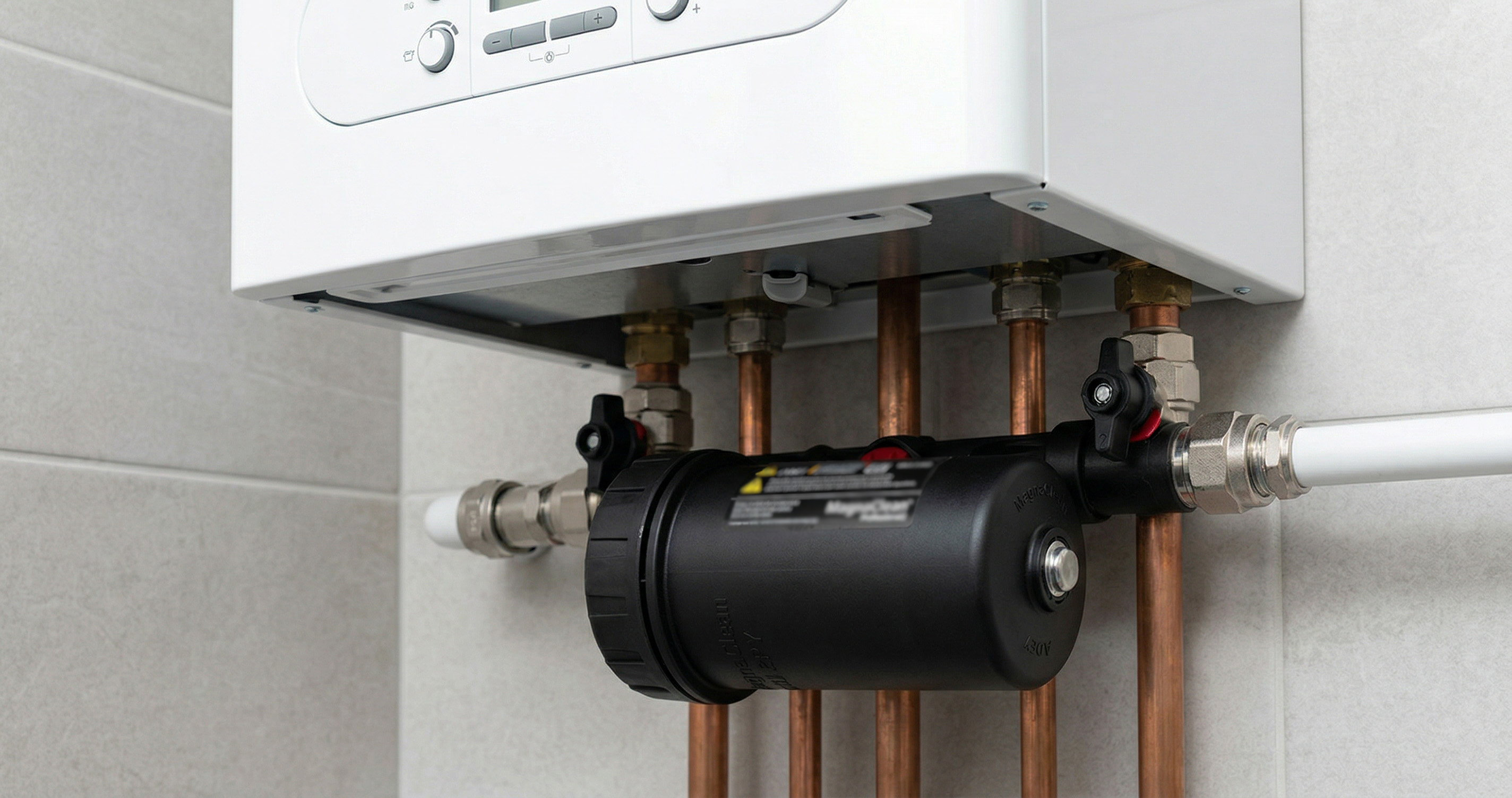
If you have had a new boiler installed in the last few years, there is a good chance a magnetic filter was fitted at the same time. If you have an older boiler without one, it is one of the best investments you can make to protect your heating system. Here is everything you need to know.
What Is a Magnetic Filter?
A magnetic filter is a small device fitted to the pipework on the return pipe of your central heating system, usually close to the boiler. Inside it sits a powerful magnet that captures metallic debris — known as magnetite or sludge — as it circulates through your system.
Magnetite is a black, iron oxide sludge that forms naturally inside radiators and pipework over time as the water reacts with the steel and iron components. It is an unavoidable byproduct of a wet central heating system, and if left unchecked, it causes serious problems.
Why Sludge Is a Problem
That black sludge might seem harmless, but it is the number one cause of heating system breakdowns. Here is what it does:
Reduces boiler efficiency. Sludge settles in the heat exchanger — the most expensive component inside your boiler. Even a thin layer of buildup acts as an insulator, meaning the boiler has to work harder and burn more gas to heat your water. Studies suggest that sludge buildup can reduce boiler efficiency by up to 6 per cent.
Causes cold spots on radiators. If your radiators are warm at the top but cold at the bottom, sludge has almost certainly settled in the lower half of the panel. Bleeding your radiators will not fix this — the blockage needs to be flushed out.
Damages the pump. Your central heating pump circulates water around the system. Sludge increases resistance and can cause the pump to seize, overheat, or fail prematurely.
Blocks valves. Thermostatic radiator valves and diverter valves inside the boiler can stick or jam when sludge gets into the moving parts. A stuck diverter valve is one of the most common causes of no hot water from a combi boiler.
Voids your warranty. Most boiler manufacturers now require a magnetic filter to be fitted as a condition of their warranty. If your boiler breaks down and there is no filter, the manufacturer may refuse the claim.
How Does a Magnetic Filter Work?
The principle is beautifully simple. The filter housing sits inline on the central heating pipework. As water flows through it, the internal magnet attracts and holds ferrous particles, pulling them out of circulation before they can reach the boiler.
Over time, the magnet collects a visible buildup of black sludge. During your annual boiler service, your Gas Safe registered engineer will remove the magnet, clean off the collected sludge, and refit it. This takes about five minutes and is a standard part of a proper service.
Popular Brands
The two most widely used magnetic filters in the UK are:
Adey MagnaClean — the original and most recognised brand. The MagnaClean Professional2 is the standard choice for domestic systems. It is compact, easy to service, and has a strong track record. Most boiler manufacturers recommend or supply Adey filters with their installations.
Fernox TF1 — a popular alternative with a slightly different design. The Fernox filter uses a removable magnetic insert and has a reputation for being quick to clean. Some engineers prefer it for tight spaces as it has a slim profile.
Both do the same job effectively. The choice often comes down to your installer's preference and what is supplied with the boiler. Either is a significant improvement over having no filter at all.
What Does a Magnetic Filter Cost?
A magnetic filter typically costs between 90 and 150 pounds including fitting, depending on the brand and the complexity of the pipework. If it is fitted during a boiler installation, many installers include it in the overall price.
Considering that a replacement heat exchanger can cost 400 to 600 pounds and a new pump 200 to 350 pounds, a filter pays for itself many times over by preventing those failures.
Should You Get One Fitted?
If any of the following apply to you, a magnetic filter is strongly recommended:
- You have a new boiler (it is almost certainly a warranty requirement)
- Your radiators have cold patches at the bottom
- Your heating water is dark or discoloured
- You have never had a power flush
- Your system is more than 10 years old
- You want to maximise boiler lifespan and keep energy bills down
If your system already has significant sludge buildup, the best approach is a power flush followed by the installation of a magnetic filter. The flush clears the existing sludge, and the filter prevents it from building up again.
Can You Fit One Yourself?
Technically, fitting a magnetic filter does not require Gas Safe registration as it is a plumbing job rather than a gas job. However, it does involve draining part of the heating system, cutting into pipework, and potentially adding inhibitor chemical. If done incorrectly, you could introduce leaks or air into the system.
We would always recommend having it fitted by a qualified plumber or heating engineer, particularly if it is being done as part of a boiler service or installation.
The Bottom Line
A magnetic filter is one of the most cost-effective ways to protect your heating system. For a relatively small outlay, you get better efficiency, fewer breakdowns, and a boiler that lasts years longer. If you do not have one, it is well worth the investment.
If you are on the Wirral or across Merseyside and would like a magnetic filter fitted, or if you are due a boiler service, give JF Plumbing & Heating a call. As Gas Safe registered engineers, we will make sure your system is clean, protected, and running as efficiently as possible.