
Kitchen Plumbing: What to Consider Before a New Kitchen
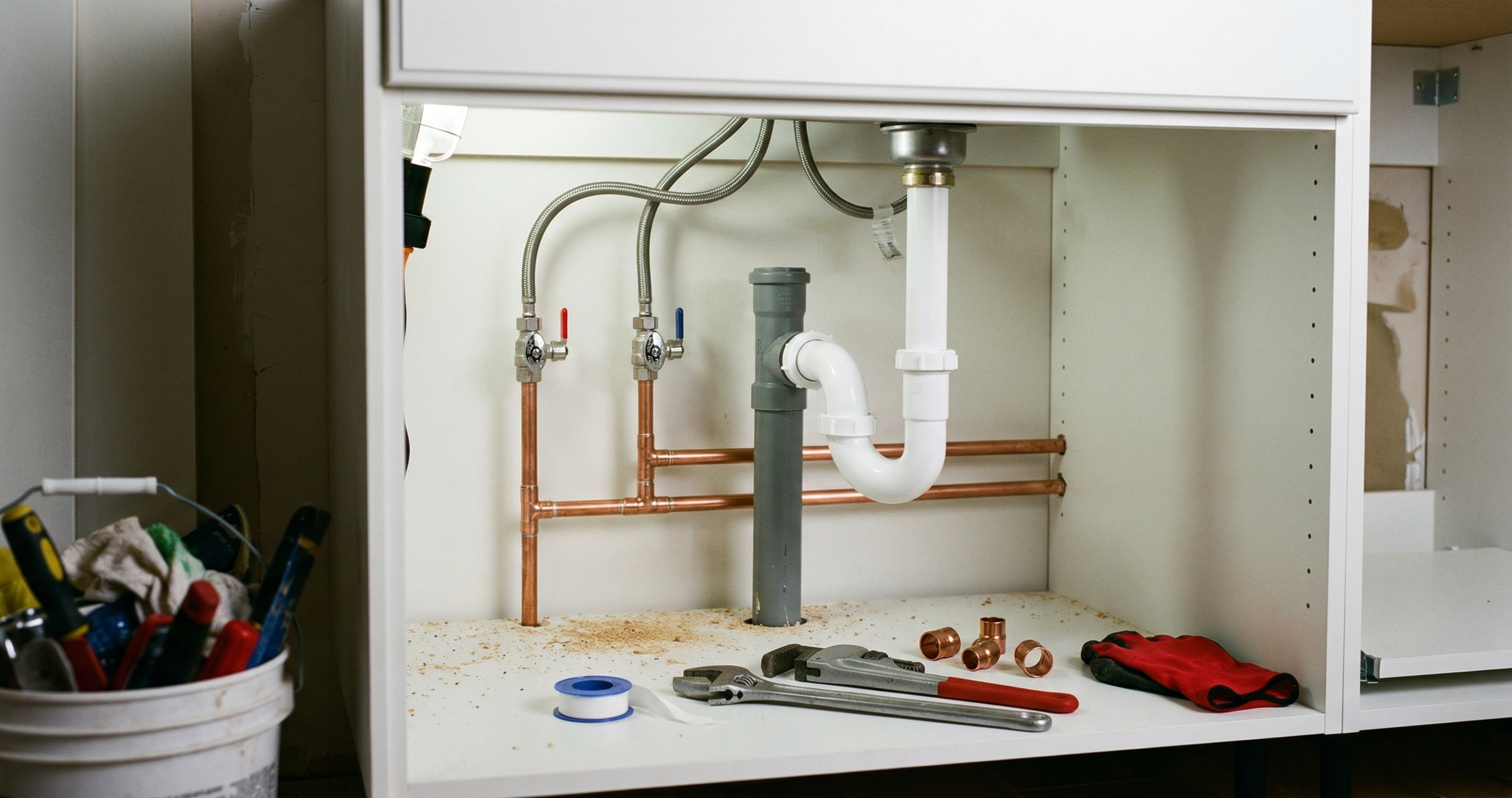
A new kitchen is one of the biggest home improvements you can make, and getting the plumbing right is absolutely critical. The layout, the appliance positions, and the pipework all need to be planned before the kitchen fitters arrive — not during the install and certainly not after.
Over the years, we have worked on dozens of kitchen renovations across the Wirral, and the projects that run smoothly are always the ones where the plumbing was considered from the start. Here is what you need to think about.
Start With the Layout
The single biggest factor in kitchen plumbing cost is whether you are moving the sink. If the new sink is going in the same position as the old one, the plumbing work is relatively straightforward — new taps, reconnect the waste, job done.
But if you are moving the sink to an island, a different wall, or even just a few feet along the worktop, the pipework needs to follow. That means extending or rerouting the hot and cold supply pipes and — more importantly — the waste pipe.
Waste pipes rely on gravity, so they need a consistent fall (slope) towards the soil stack or external drain. The further you move the sink from the existing waste connection, the more complex and potentially expensive this becomes. In some cases, the waste run is too long or too flat, and the pipe needs to go under the floor rather than along the back of the units.
If you are at the design stage, discuss your layout with a plumber before finalising it with the kitchen company. A small adjustment to the sink position can sometimes save hundreds of pounds in plumbing work.
Hot and Cold Supply Pipes
Your existing kitchen will have hot and cold supply pipes feeding the sink taps. In older Wirral properties, these are often 15mm copper pipes running along the wall behind the units or under the floor.
For a new kitchen, these pipes may need to be:
- **Extended** to reach a new sink position
- **Rerouted** if the layout has changed significantly
- **Upgraded** if the existing pipes are lead (still found in some pre-1970s properties) or corroded copper
While the kitchen units are out and the walls are exposed, it is the ideal time to replace any old or suspect pipework. Once the new kitchen is fitted, accessing these pipes becomes much more difficult and disruptive.
Appliance Connections
Modern kitchens often include several water-fed appliances, each needing its own supply and waste connection.
Dishwasher. Needs a cold water supply (via a self-cutting valve or a tee off the cold pipe) and a waste connection (usually into the sink waste trap or a spigot on the waste pipe). Make sure the supply valve is accessible after the kitchen is fitted — you will need to isolate it if the dishwasher ever develops a leak.
Washing machine. If your washing machine is in the kitchen, it needs both hot and cold supply feeds (though many modern machines are cold-fill only) and a standpipe waste. A standpipe is a vertical pipe with a trap that the washing machine hose hooks into. It should be at least 600mm high to prevent backflow.
American-style fridge. Plumbed-in fridges with ice makers and cold water dispensers need a dedicated cold water supply, usually a narrow 6mm or 10mm pipe teed off the mains. This is a small job but needs to be planned in advance so the pipe is in place before the fridge goes in.
Waste disposal unit. If you want a waste disposal unit (also called a food waste disposer), this fits under the sink in place of the standard waste trap. It needs its own switched fused spur for the electrical connection. Your plumber can fit the unit and adapt the waste pipework; an electrician handles the power supply.
Isolation Valves
Every appliance and every tap should have its own isolation valve — a small quarter-turn valve on the supply pipe that lets you shut off water to that specific fitting without turning off the whole house.
This is standard practice on new installations, but many older kitchens lack them. When we are doing the first fix plumbing for a new kitchen, we fit isolation valves as a matter of course. They cost next to nothing and save enormous hassle if you ever need to change a tap or disconnect an appliance in the future.
Boiler Considerations
If your boiler is in the kitchen — which is very common in Wirral homes — a new kitchen layout might affect access to it. Consider the following:
Can the boiler stay where it is? If the new units are going around it, check that there is still adequate clearance for servicing and that the flue terminal is not obstructed by new units or an extractor hood.
Does it need relocating? Moving a boiler is a significant job that involves extending gas, water, and flue pipework. It must be done by a Gas Safe registered engineer. If a move is necessary, it is far better to do it before the new kitchen goes in rather than after.
Is it due for replacement? If your boiler is over 12 to 15 years old, a kitchen renovation is the perfect time to replace it. You can choose the ideal position for the new boiler to suit your new kitchen layout, and the disruption is absorbed into the overall project.
First Fix Before Kitchen Fitting
The golden rule of kitchen plumbing is this: get the first fix done before the kitchen fitters arrive. First fix means:
- All supply pipes run to their final positions and capped off
- Waste pipes run to the sink and appliance positions
- Boiler relocation completed (if applicable)
- Gas pipe extended or rerouted (if the cooker is moving)
- Any underfloor pipework laid and tested
Once the first fix is complete, the kitchen fitters can install the units, worktops, and appliances knowing that all the connections are exactly where they need to be. Your plumber then returns for the second fix — connecting taps, traps, appliances, and testing everything.
This two-stage approach avoids delays, prevents the kitchen fitters and plumber from getting in each other's way, and ensures a much cleaner result.
Get Your Plumber Involved Early
If you are planning a new kitchen on the Wirral or across Merseyside, get in touch with JF Plumbing & Heating at the design stage. We can review your layout, advise on pipe runs and appliance positions, and give you a clear quote for the plumbing work — so there are no surprises once the project is underway.