
Preparing Your Plumbing for a Holiday: A Checklist
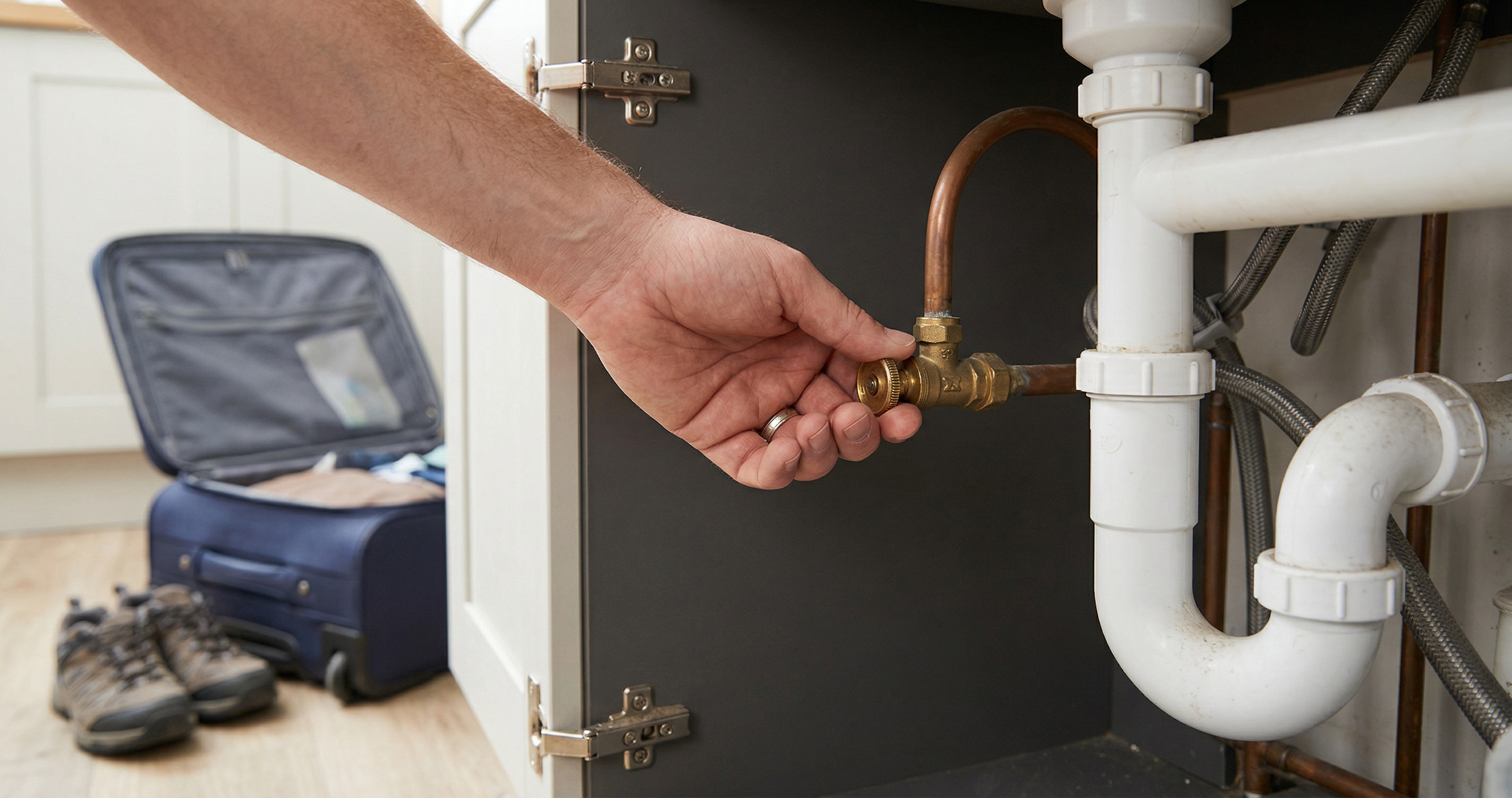
There is nothing worse than coming home from a relaxing holiday to find a pool of water on the kitchen floor — or worse, a ceiling that has come down because a pipe burst while you were away. Water damage is one of the most common and expensive home insurance claims in the UK, and many of these incidents happen in empty homes where a small leak has gone unnoticed for days or weeks.
A few minutes of preparation before you leave can save you thousands of pounds and a great deal of stress. Here is a practical checklist for protecting your plumbing while you are on holiday.
Turn Off the Water at the Stopcock
This is the single most effective thing you can do. If the water supply is off, a burst pipe or failed fitting cannot flood your home.
Your internal stopcock is usually found under the kitchen sink, in a utility room, or in the cupboard under the stairs. Turn it clockwise until it is fully closed, then open a tap to confirm the water has stopped. If you have not turned the stopcock in a while, it may be stiff — turn it gently and do not force it. A seized stopcock is worth getting replaced before your next trip.
If you have an outside stop valve (usually under a small cover on the pavement), you can turn that off as well for extra peace of mind. You will need a stopcock key, available from any hardware shop.
Important: If you are turning off the water, make sure your central heating system is a sealed system (most combi boilers are). If you have an open-vented system with a cold water tank in the loft, turning off the mains will eventually empty the tank. Check with a plumber if you are unsure which type you have.
Set Your Heating to Frost Protection
If you are going away during the colder months — and on the Wirral, that can mean any time from October to April — do not turn your heating off completely. A frozen pipe that bursts can cause catastrophic damage.
Most modern boilers have a frost protection setting that fires the boiler briefly when the temperature drops below a set threshold, usually around 5 degrees. Check your boiler manual for how to activate it. On most combi boilers, it is simply a case of leaving the boiler switched on with the thermostat set to around 10 to 12 degrees.
If your home has pipes in vulnerable locations — lofts, garages, external walls, or unheated extensions — frost protection is essential, not optional. I have attended many callouts on the Wirral where a pipe in the loft has burst because the heating was turned off during a cold snap. The resulting damage often runs into thousands of pounds.
For more detailed guidance on frozen pipes, see our guide to preventing frozen pipes.
Check for Existing Leaks
Before you leave, do a quick inspection:
- **Under sinks** — check for damp patches, drips from waste connections, or water stains on the cabinet floor
- **Around the toilet base** — look for water pooling at the base or dampness on the floor behind the toilet
- **Washing machine and dishwasher hoses** — these are under constant pressure and are a common source of leaks in empty homes. Check for bulges, cracks, or dampness at the connections
- **Boiler and pipework** — look for drips around valves, joints, and the boiler's pressure relief pipe
A small drip that you can live with while you are home can cause serious damage over a fortnight of being left unattended.
Use Isolation Valves
Even if you do not want to turn off the main stopcock, you can reduce risk by closing isolation valves on individual appliances:
- **Washing machine** — turn off the hot and cold isolation valves on the wall behind or beside the machine. These are small quarter-turn valves that close with a flat-head screwdriver
- **Dishwasher** — same principle, close the supply valve under the kitchen sink
- **Toilet** — each toilet has an isolation valve on the supply pipe, usually near the base. Closing these means a faulty fill valve cannot cause an overflow
This targeted approach is a good option if you want to leave the heating system running with water pressure but do not want appliances under pressure while you are away.
Insulate Vulnerable Pipes
If you have not already insulated pipes in your loft, garage, or other unheated spaces, do it before you go away — especially in winter. Pipe insulation foam is cheap (a few pounds for a pack of tubes) and takes minutes to fit. It simply pushes over the pipe and holds itself in place.
Pay particular attention to:
- Pipes in the loft space
- Pipes running along external walls
- Pipes in the garage or unheated outbuildings
- The condensate pipe from your boiler (the small plastic pipe that usually runs outside). This is a common freeze point in cold weather
Ask Someone to Check the Property
If you are away for more than a week, ask a trusted neighbour, friend, or family member to pop in every few days. They do not need to do anything complicated — just check for obvious leaks, make sure the heating is running, and confirm nothing looks amiss.
This is particularly important for insurance purposes. Many home insurance policies require the property to be checked regularly during extended absences, especially in winter. Check your policy wording — some insurers specify visits every 48 to 72 hours if the home is unoccupied for more than 30 days.
What to Do If You Come Home to a Leak
If you return to find water damage:
Insurance Implications
It is worth knowing that insurers can reduce or reject water damage claims if they believe the homeowner did not take reasonable precautions. Leaving a home unoccupied for weeks with the water on and the heating off during winter could be seen as negligent.
Turning off the stopcock, setting the heating to frost protection, and arranging regular property checks puts you in a strong position if you ever need to make a claim.
A Few Minutes Now Saves a Lot Later
Holiday preparation for your plumbing takes ten minutes at most. Turning off the water, setting the heating, and doing a quick visual check are simple steps that protect your home from what can be devastating and expensive water damage.
If you would like a pre-holiday plumbing check or need a seized stopcock replaced before you travel, JF Plumbing & Heating is here to help. We work across the Wirral and can usually fit you in at short notice. Get in touch to book a visit.