
Clogged Drains: Prevention and When to Call a Professional
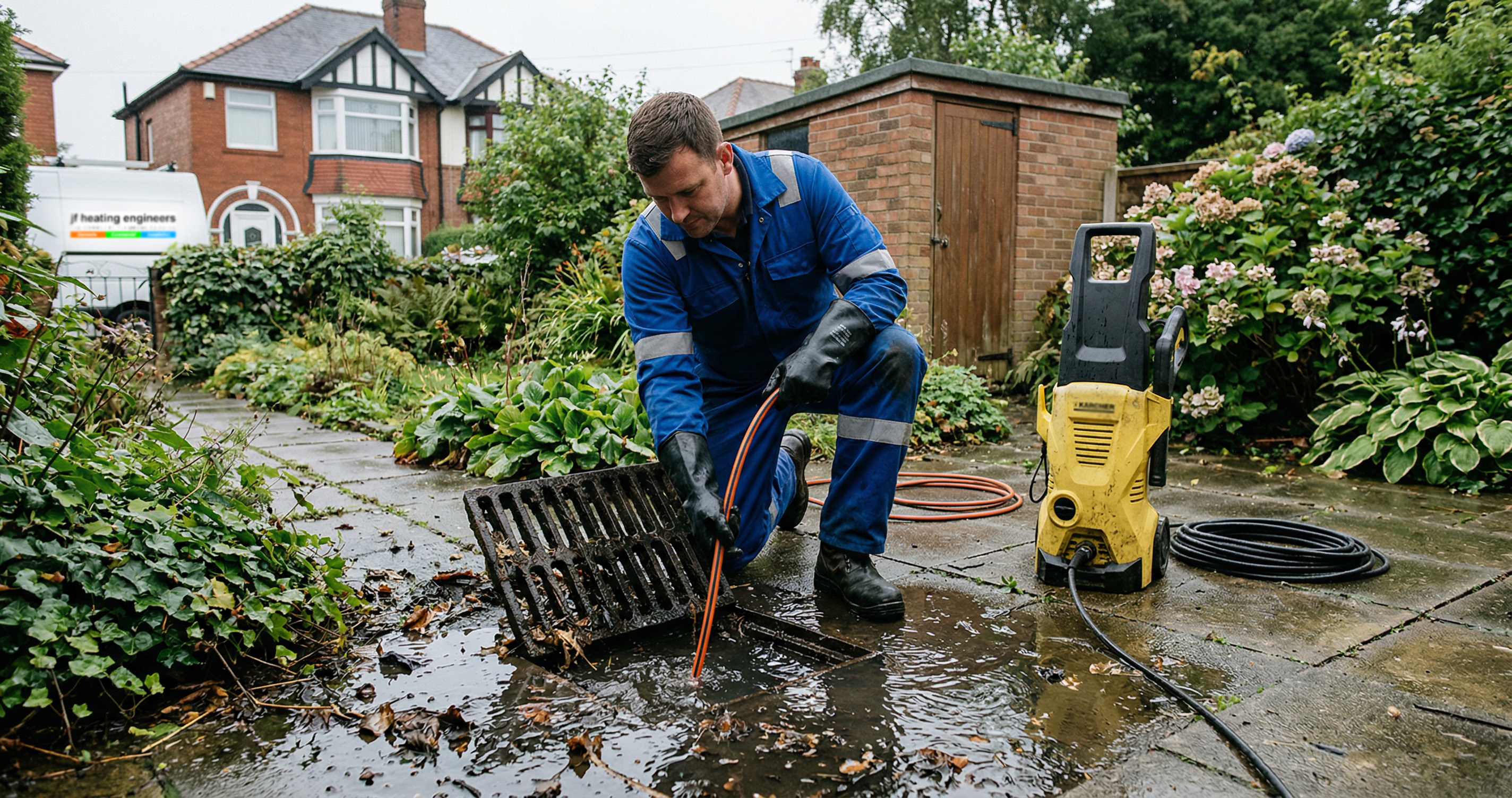
A slow-draining sink is easy to ignore — until one morning the water will not drain at all and you are standing in a puddle. Blocked drains are one of the most frequent callouts I deal with across the Wirral, and in most cases, the blockage has been building up for weeks or months before it finally causes a problem.
The good news is that most drain blockages are preventable. And when they do happen, knowing the difference between a DIY fix and a job for a professional can save you time and money.
What Causes Drains to Block?
Understanding what goes down your drains is the first step to keeping them clear.
Fats, Oils, and Grease
This is the single biggest cause of kitchen drain blockages. When you pour cooking oil, bacon fat, or greasy water down the sink, it cools as it travels through the pipework and solidifies on the inside of the pipes. Over time, this coating narrows the pipe and catches food particles, creating a stubborn blockage.
It does not matter how much hot water you run afterwards — the grease will cool and stick further down the line. This is a particular problem in older Wirral properties where the internal pipework may already be narrower than modern standards.
Hair
Bathroom drains — showers, baths, and basin sinks — are vulnerable to hair buildup. Hair tangles around the drain fitting and combines with soap residue to form a dense plug. It accumulates gradually, so the first sign is usually water draining slowly before it eventually stops altogether.
Wet Wipes and Sanitary Products
Despite what some packaging claims, wet wipes are not truly flushable. They do not break down like toilet paper and are a leading cause of toilet and sewer blockages across Merseyside. Sanitary products, cotton buds, and dental floss are equally problematic. The only things that should go down a toilet are human waste and toilet paper.
Food Waste
Even with a sink strainer, small food particles wash down the kitchen drain. Rice and pasta are particularly troublesome because they continue to absorb water and expand inside the pipe. Coffee grounds are another common offender — they clump together and stick to grease deposits.
DIY Methods for Minor Blockages
If you have a slow-draining sink or a minor blockage, these methods are worth trying before calling a plumber.
Plunger
A simple cup plunger is surprisingly effective. Fill the sink or basin with enough water to cover the plunger cup, place it firmly over the drain, and pump vigorously 10 to 15 times. The pressure change can dislodge soft blockages. For double kitchen sinks, block the second drain with a wet cloth so the pressure goes where you need it.
Drain Snake or Zip Tool
A plastic drain snake — sometimes called a zip-it tool — costs a couple of pounds from any hardware shop. Push it down the drain, twist, and pull it back out. It hooks onto hair and debris and pulls it free. This works brilliantly on bathroom drains where hair is the culprit.
Baking Soda and Vinegar
Pour half a cup of baking soda down the drain, followed by half a cup of white vinegar. Cover the drain and leave it for 30 minutes, then flush with boiling water. The fizzing action can break up light grease and organic buildup. It is not a miracle cure for serious blockages, but it works well as a monthly maintenance flush.
Boiling Water
For very mild grease buildup, pouring a full kettle of boiling water directly down the kitchen drain can soften and shift deposits. Do this slowly in two or three pours, allowing each to work for a few seconds. Note: do not use boiling water if you have PVC plastic pipes, as the heat can soften the joints.
When to Call a Professional
DIY methods handle surface-level blockages in the trap or the first few inches of pipework. If the problem is deeper, you need professional equipment and expertise.
Call a plumber if:
- **Multiple drains are slow or blocked at the same time** — this usually indicates a blockage in the main drain run, not an individual fixture
- **Water is backing up through other outlets** — for example, flushing the toilet causes water to rise in the shower tray. This points to a shared drainage issue
- **You can see or smell sewage** — a serious blockage or broken pipe that needs immediate attention
- **The blockage keeps returning** — a recurring blockage in the same drain suggests a structural issue such as a collapsed pipe, root intrusion, or a bellied section where debris collects
- **Outside drains are overflowing** — the manhole or inspection chamber outside your property is full or backing up
Drain Surveys
For persistent or unexplained blockages, a CCTV drain survey is the most effective diagnostic tool. A small camera is fed through the drainpipe and records footage of the pipe's interior. This identifies the exact location and cause of the blockage — whether it is tree root intrusion, a collapsed section, displaced joints, or a buildup of scale and debris.
On the Wirral, tree root intrusion is more common than many homeowners realise. Mature trees send roots towards drain runs because they are a source of water and nutrients. The roots penetrate joints and cracks, growing inside the pipe and catching debris until the drain blocks completely.
Who Is Responsible for Blocked Drains?
This catches a lot of homeowners out. As a general rule:
- **You are responsible** for drains within the boundary of your property that serve only your property
- **The water company** (United Utilities on the Wirral) is responsible for shared sewers and lateral drains that serve multiple properties
If your outside drain or manhole is blocked and it serves only your property, that is your responsibility to fix. If it is a shared sewer, contact United Utilities. If you are unsure, a plumber can help you determine where the responsibility lies.
Prevention Is the Best Approach
A few simple habits will keep your drains flowing freely:
- **Never pour cooking oil or grease down the sink** — wipe pans with kitchen paper and bin it, or collect oil in a jar for disposal
- **Use sink strainers** — in both the kitchen and bathroom to catch food and hair
- **Run hot water after washing up** — helps flush residual grease through the system
- **Monthly maintenance flush** — the baking soda and vinegar method mentioned above
- **Only flush toilet paper** — nothing else, regardless of what the packaging says
- **Keep an eye on outside drains** — clear leaves and debris from grate covers, especially in autumn
Do Not Let a Slow Drain Become an Emergency
A drain that takes a few extra seconds to empty is trying to tell you something. Addressing it early — with a plunger, a drain snake, or a call to a plumber — is far cheaper and less disruptive than dealing with a fully blocked drain or a sewage backup.
If you are dealing with a stubborn or recurring blockage on the Wirral, JF Plumbing & Heating can help. We carry the equipment to clear blockages and can arrange a CCTV survey if there is a deeper issue. Contact us to get things flowing again.